As only 120 days are left for global sports event – XXXII Olympiad or Tokyo 2020, let’s look at the history of Tokyo as the host city of the Games.
It was the year 1932 and process of selection of host city of 1936 Olympics begun with top 4 bidders for the Olympic 1940 – Barcelona,Argentina Rome ,Italy Helsinki,Finland Tokyo, Japan
In 1936, Tokyo was finalised to be the host city and creates history by being the first non-Western city to win an Olympic bid in a surprise decision.
The preparations started.The Olympic Village was to be built on the present sites of Kinuta Park or Todoroki Gorge. A schedule was drawn up, and guidelines were printed in four languages. Monthly magazines and posters were printed and distributed internationally. Construction began on some buildings, and arrangements were made with hotels, travel agents, and airlines for easy access.
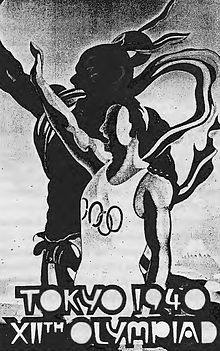
All was going smooth.The games were scheduled from September 21 to October 6, 1940.The Tokyo organizing committee released its budget for the Games(after the Games were cancelled) a total of ¥20.1 million, one-third of which would have been paid by the Tokyo metropolitan government.
But the dark clouds shadowed the Olympics and on July 7 1937,Second Sino-Japanese War broke out. Kono Ichiro, a member of the Diet (legislature), immediately requested that the Olympics be forfeited.
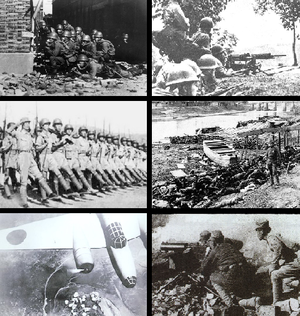
source – wikipedia
But Japan’s IOC delegates persisted under a belief that the war would soon be over(Coincidentally, till now, Japan is insisting on holding Tokyo 2020 OLympics as scheduled despite the coronavirus outbreak).
The war intensified and alternative options of choosing either different site or of boycotting the Games were they to proceed in Japan were in consideration.
In March 1938, the Japanese provided reassurances to the IOC that Tokyo would still be able to serve as the host city. However, many Diet members in Japan had already openly questioned hosting the Olympics in wartime, and the military was unreasonably demanding that the organizers build the venues from wood because they needed metals for the war front(I feel that the deamand was partially unreasonable. It was right on the part of Japanese government to use most of the essential resources for the war but demanding the organisesrs to use wood…why?They could have used something other than metals in building.Necessity is the mother of invention).
In July, a legislative session was held to decide the matters of the Summer and Winter Olympics and the planned 1940 World’s Fair .Japan believed that they could wrap up the war till 1940 so they “postponed “1940 World’s Fair but Olympics could not be moved and was cancelled.
The IOC then awarded the Games to Helsinki,Finland, the runner-up city in the original bidding process. The Games were then scheduled to be staged from July 20 to August 4, 1940 (which were previously scheduled from September 21 to October 6, 1940 as mentioned earlier ).The Olympic Games were suspended indefinitely following the outbreak of World War II (1939-1945) and did not resume until the London Games of 1948.

source- olympic.org
Eventually Tokyo, during the 55th IOC session in West Germany, on 26 May 1959 was chosen to host the 1964 Summer Olympics over bids from Detroit, Brussels and Vienna. The estimated cost of Tokyo 1964 Summer Olympics by The Oxford Olympics Study is at US$282 million in 2015-dollars compared to costs of USD 4.6 billion for Rio 2016, USD 40-44 billion for Beijing 2008 and USD 51 billion for Sochi 2014( the most expensive Olympics in history).
The 1964 Games were a landmark in Olympics history as –
–the first Olympics to be held in Asia. –first time South Africa was barred from taking partdue to its apartheid system in sports. –first to be telecast internationally without the need for tapes to be flown overseas, as they had been for the 1960 Olympics four years earlier. –first to have color telecasts, albeit partially. –the last to use a traditional cinder track for the track events. Since 1968, a smooth, synthetic, all-weather track is used.
The 1964 Summer Games featured 19 different sports encompassing 25 disciplines with USA topping the chart with maximum golds(36),USSR winning the most overall medals and Japan was ranked 3rd with 29 medals out of which 16 were gold
References- 1940 Summer Olympics , 1964 olympics https://en.wikipedia.org/wiki/1964_Summer_Olympics

 TOKYO OLYMPICS